Fall Rise Infotech

Fall Rise Infotech

Logistics Operations Portal Development

One dashboard to run the operation: approve drivers, watch every order, set pricing zones and rates, and see revenue and support city by city.

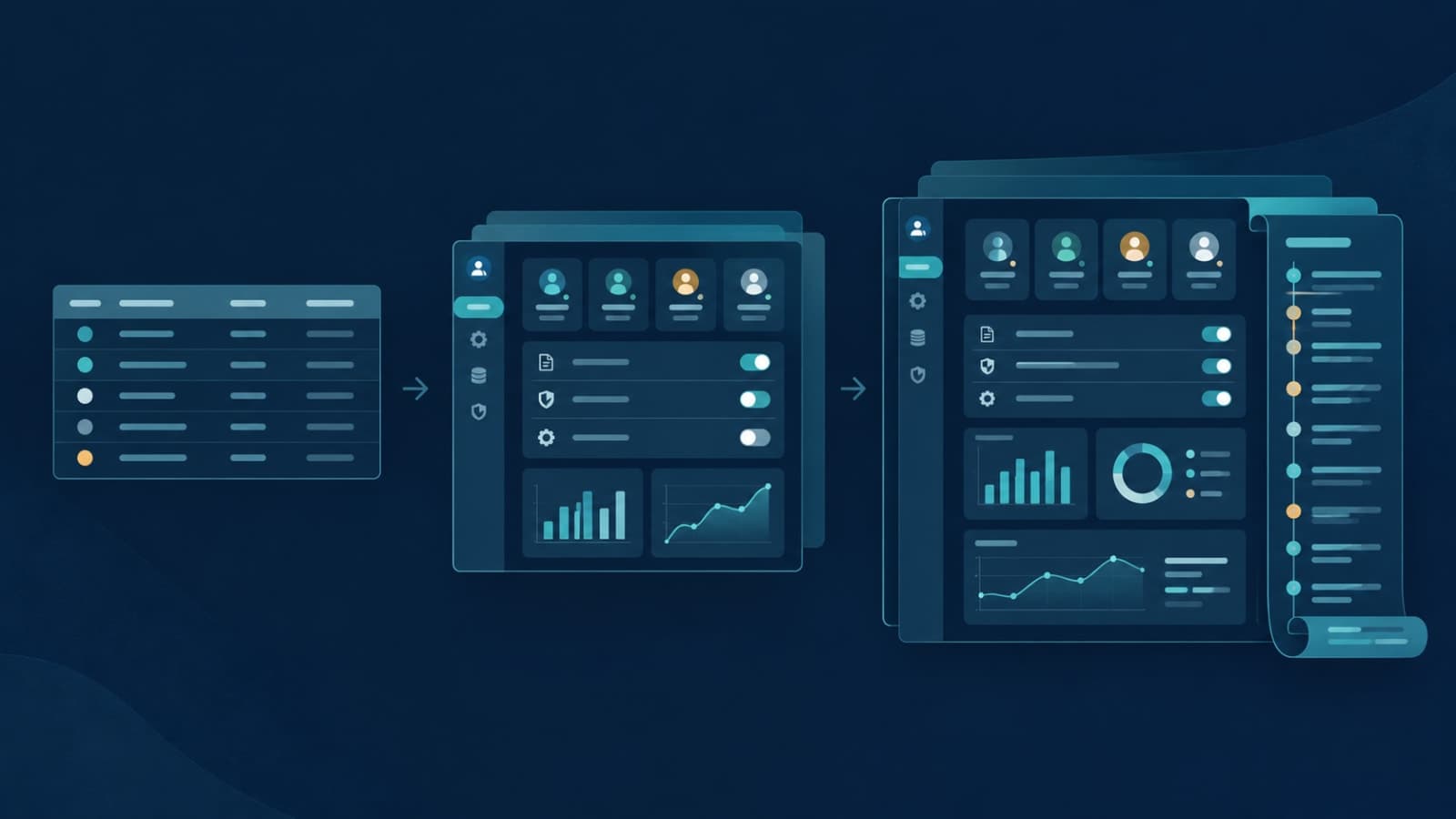
Behind every booking and driver app is the team that runs the operation. When their tools are spreadsheets, group chats and a payment dashboard, nobody has one view of what is happening right now: which drivers are approved, which orders are stuck, what each zone earns. An operations portal is that view, and it is where pricing, coverage and support are controlled.

We built the operations portal for Bhaada, an on-demand cargo platform in Uttar Pradesh. It runs on the same real-time backend as the customer and driver apps.

What a logistics operations portal should cover

  • Drivers: onboarding, KYC review and approval.
  • Orders: live status of every order, by city.
  • Pricing and coverage: zones, rates and serviceable areas.
  • Money: transactions, revenue and subscription income.
  • Support: tickets raised by customers and drivers, against their orders.
What We Built for Bhaada

01

City-wide operations in one dashboard

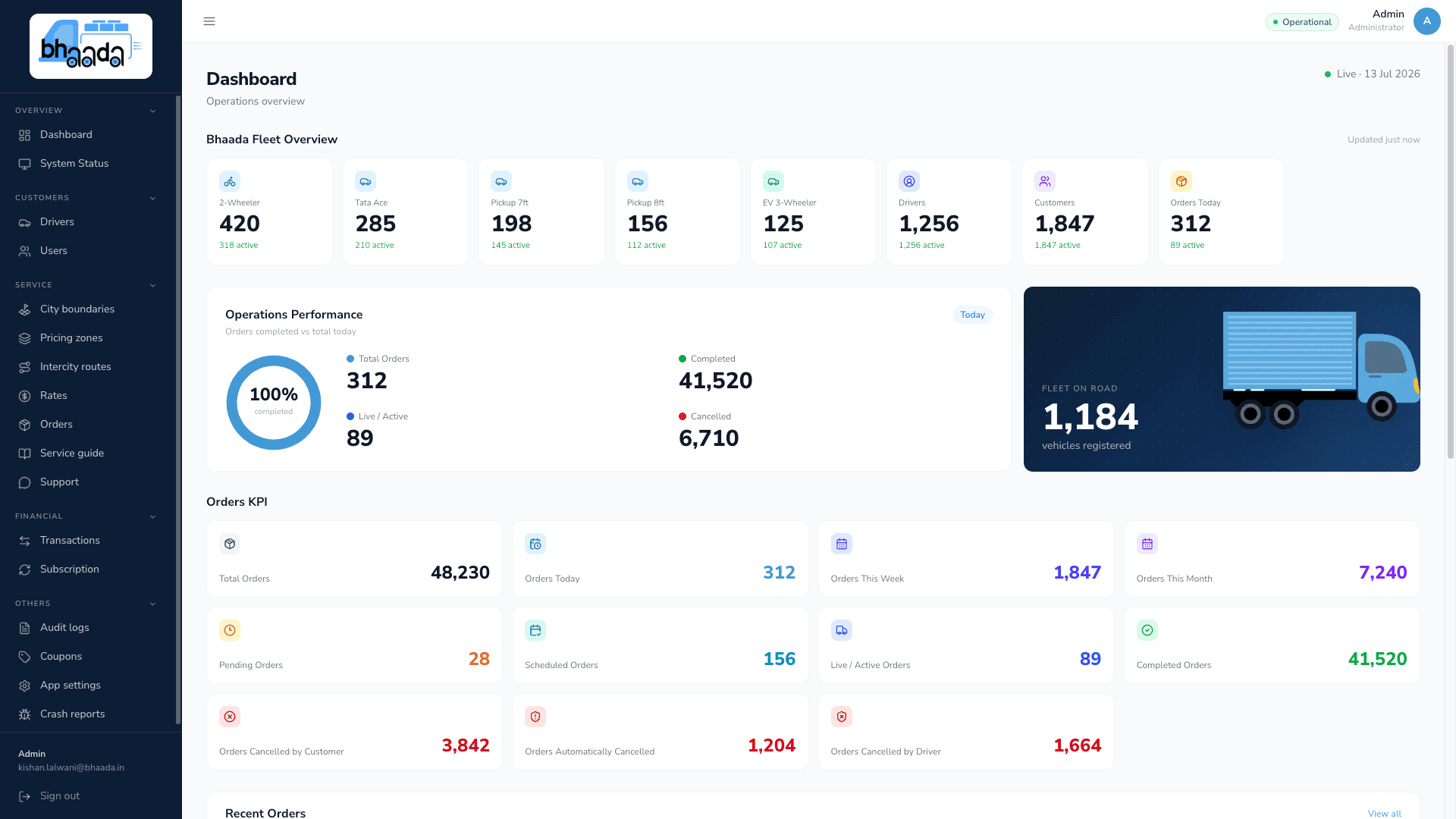
The Bhaada portal is the hub for users, drivers, orders and city reach, with order volume, revenue and city-wise operations visible in one place.

  • Users, drivers and orders by city
  • Order volume and revenue tracking
Bhaada operations portal dashboard
02

Driver approval and onboarding

Driver-partners sign up in the driver app with KYC documents, and the operations team reviews and approves them before they can go online.

  • KYC review
  • Admin-approved onboarding
03

Pricing zones, rates and coverage

The team tunes pricing zones, rates and coverage per city. Zones are built on the same H3 grid the apps use for matching, so a change applies everywhere at once.

  • Zone and rate management
  • Coverage by city on the H3 grid
  • One coupon and pricing engine for all apps
04

Finance, support and auditing

Finance transactions, subscription MRR and support tickets sit next to dynamic coupons, system status and auditing, so the team can resolve issues without switching tools.

  • Transactions and subscription MRR
  • Support tickets
  • Coupons, system status and audit trail

One backend, so state never drifts

A customer cancelling mid-delivery, a driver going offline mid-route or a coupon applied differently on two apps can't be fixed if each tool keeps its own copy of the order. In Bhaada, the portal, the customer app and the driver app read and write through one real-time core.

What drives the scope

  • Roles: how many teams use the portal and what each may change. See role-based access.
  • Cities and zones: one area vs many, each with its own rates.
  • Finance depth: order totals only, or transactions, payouts and subscriptions.
  • Reporting: live counts vs historical analysis and exports.

How we build it

We build operations portals as web apps on a Node.js, Express and TypeScript backend with MongoDB and Redis, with live updates over Socket.IO. For what drives the effort, see admin panel development cost.

FAQ

It covers similar ground (orders, drivers, pricing) but is built around your own rules and apps. Our post on TMS vs custom software compares the two.

Yes. Bhaada runs city-wise operations with its own zones and rates for each city.

Yes. Access is set by role, so support, finance and operations each see what they need.

Build a simple portal alongside the first app. Your team needs to see and fix orders from the first booking.

Part of our Logistics Platform Development work.

Running operations from spreadsheets?

Tell us what your operations team tracks today and where it lives. We'll scope a portal that brings it into one place.

Send your project brief

Avg. response: 1–2 hours · Remote-first — clients worldwide