Fall Rise Infotech

Fall Rise Infotech

Logistics Platform Development

Cargo booking, dispatch, and driver-partner platforms built for logistics and transport businesses in Tier-2 and Tier-3 markets.

Logistics Platform Development banner

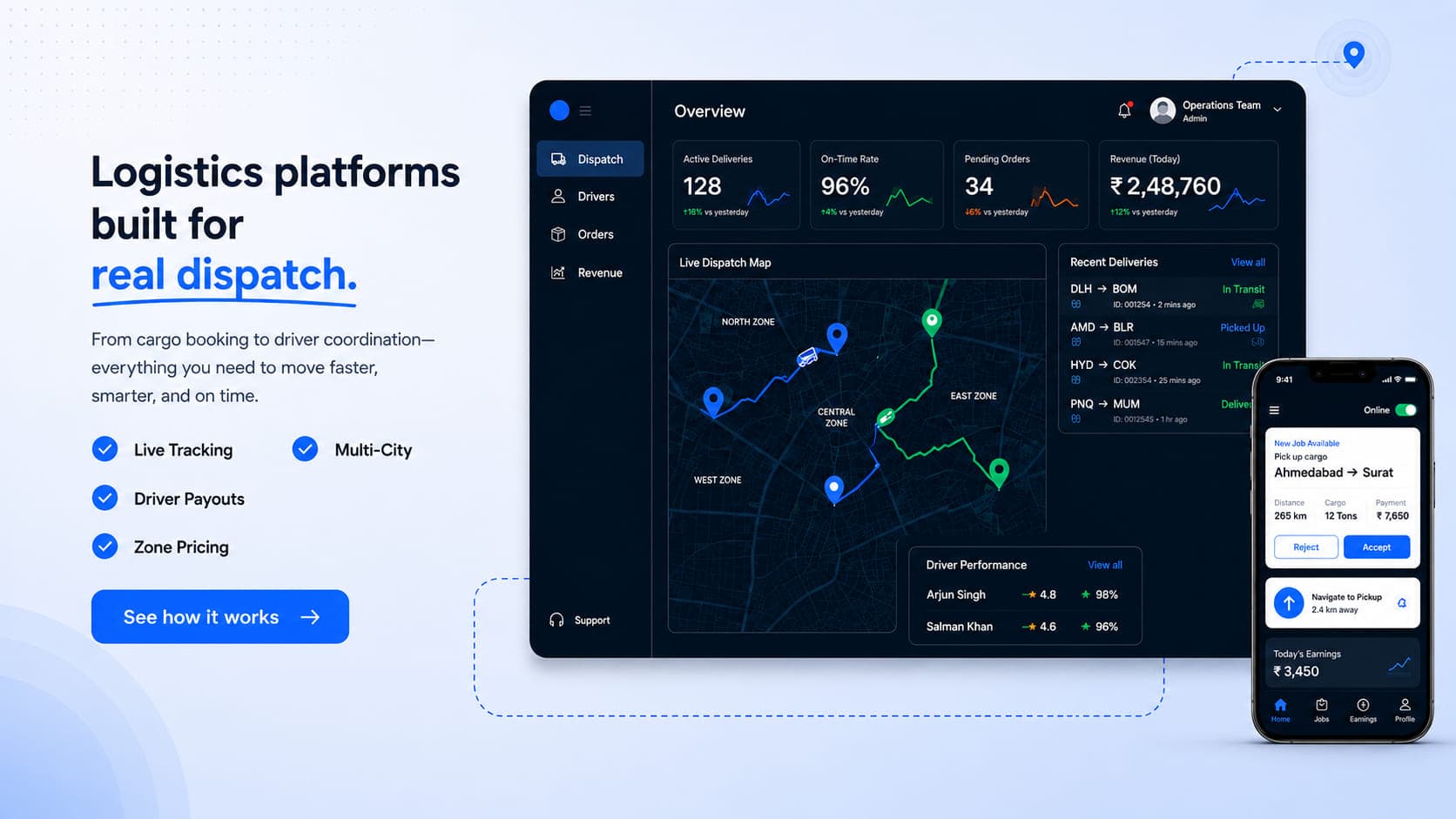
Logistics platform development means building for coordination — a booking on one side, a driver on the other, and dispatch logic that has to hold up under real-world traffic, not a demo. We've built the full stack for this: customer-facing booking apps, driver-partner apps, and the admin platforms that tie dispatch, pricing, and payouts together.

Where we've worked in this space:

  • Multi-stop cargo booking with live tracking and location-aware driver matching
  • Driver-partner apps — real-time job alerts, navigation, and wallet payouts
  • Admin platforms for pricing zones, driver onboarding, and revenue tracking
  • Bilingual marketing sites built to grow both sides of a two-sided marketplace

The problems a logistics platform has to solve

Most small and mid-size transport operators still take bookings by phone and coordinate drivers over WhatsApp. That works until volume grows — then bookings get missed, customers can't see where their cargo is, drivers sit idle between jobs, and payouts turn into a weekly reconciliation exercise. A logistics platform replaces those manual hand-offs with one shared system that the customer, the driver, and the operations team all see in real time.

What we build

ComponentWhat it does
Customer booking appMulti-stop bookings, scheduled orders, coupons, and live order tracking
Driver-partner appOnline/offline availability, job alerts, turn-by-turn navigation, OTP-verified pickup and drop, wallet payouts
Dispatch and matchingLocation-aware driver assignment (for Bhaada, an Uber H3 grid) so the nearest available driver gets the job
Operations portalPricing zones, driver onboarding, order oversight, and revenue tracking
Marketing siteCity landing pages and driver sign-up, bilingual where the market needs it

Case study: Bhaada

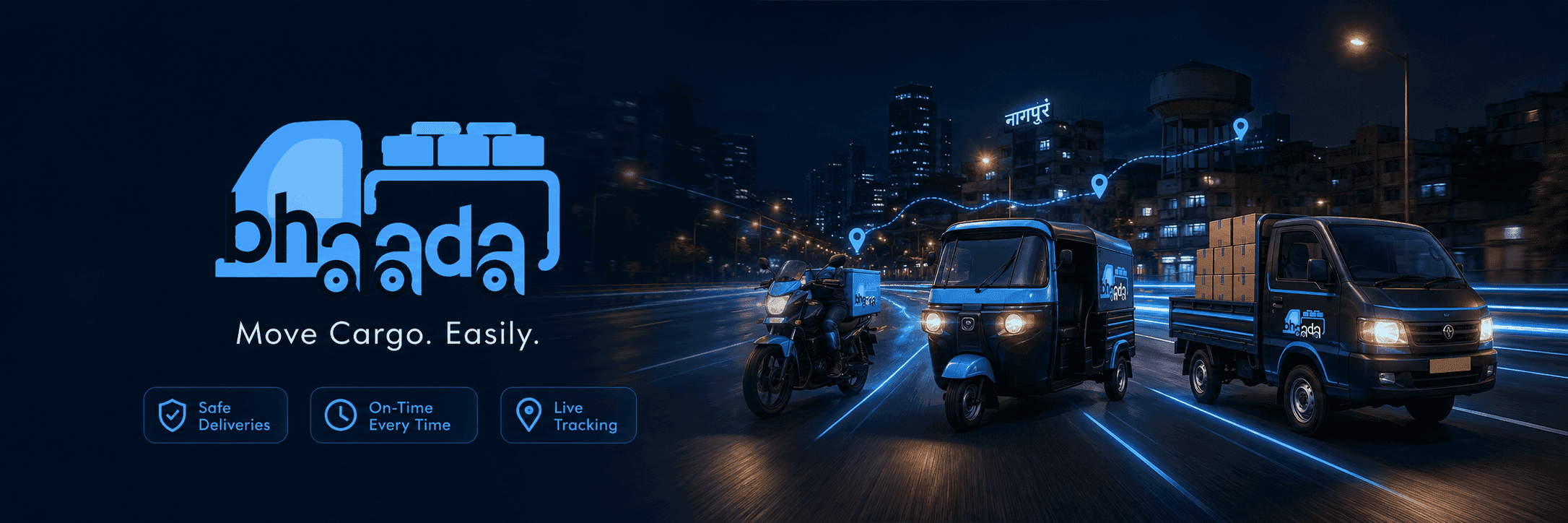
For Bhaada, an on-demand cargo delivery startup in Uttar Pradesh, we built the whole platform: a customer app, the Bhaada Buddy driver-partner app, an operations portal, and a bilingual Hindi and English marketing site with city pages for Kanpur, Lucknow, and Unnao — all backed by one real-time system.

Timeline

A focused MVP — one customer app, one driver app, and a basic admin panel — typically takes 6–12 weeks, depending on how complex dispatch, pricing, and payouts are. We confirm the timeline after scoping your v1.

Why This Industry

Logistics in Tier-2/3 Indian cities is still underserved by software — most operators run on WhatsApp groups and phone calls. There's real, durable demand for platforms that formalize dispatch and payouts without pricing out small operators.

FAQ

Usually three: a customer app for booking and tracking, a driver-partner app for accepting jobs and navigation, and an operations portal for pricing, driver onboarding, and payouts. A marketing site is often a fourth piece, to acquire both customers and drivers.

By location. The platform assigns a booking to the nearest available driver using a location index — for Bhaada we used an Uber H3 grid — so matching stays fast as the number of drivers grows.

A focused MVP with a customer app, a driver app, and a basic admin panel typically takes 6–12 weeks, depending on how complex dispatch, pricing, and payouts are.

Yes. The Bhaada marketing site is bilingual in Hindi and English, and the apps can ship with multiple languages when your drivers or customers need them.

Guides for This Industry

Bhaada cargo logistics platform
App Development
Read Article
Cargo Booking & Delivery Platform Development: What It Actually Takes

What a real cargo booking and delivery platform actually requires — dispatch, driver apps, and live sync — plus what we built for Bhaada.

2 min read·Sep 29, 2026
Illustration of a cargo delivery van on a city map with a live tracking route, representing cargo logistics dispatch software
Case Study
Read Article
Why Phone-Based Cargo Booking Is Costing Tier-2 Logistics Businesses Customers

Phone-based cargo dispatch works until volume grows. Here's what it's quietly costing Tier-2 and Tier-3 logistics businesses, and what a real-time booking platform looks like.

2 min read·Sep 22, 2026
Map of connected cities with cargo vehicles and a browser window, representing local SEO for a logistics startup
Case Study
Read Article
SEO for Logistics Companies: How We Built SEO Into a Logistics Startup's Website

A pre-launch cargo delivery startup needed to win shippers and recruit drivers before its apps went live. Here's how we built local SEO into the Bhaada marketing site from day one.

6 min read·Oct 11, 2026
Busy support desk contrasted with a customer checking order status in a self-service portal
Business
Read Article
Why Your Customers Keep Calling to Ask "Where's My Order?" (and How a Self-Service Portal Fixes It)

Status calls don't mean customers are impatient. They mean the information lives in your team's heads. Here's what a self-service customer portal should show, and how it frees up your team.

3 min read·Oct 13, 2026
Field technician using an app that saves work offline in a basement with no signal
Product Strategy
Read Article
Your Field Team Has No Signal: Why Offline Mode Matters for Operations Apps

Basements, warehouses, and rural sites all have one thing in common: no signal. If your field app stops working there, your team goes back to paper. Here's what offline mode should do.

3 min read·Oct 20, 2026
One bad data record cascading into multiple business errors downstream, with a shield at the point of entry
Business
Read Article
How Much Bad Data Is Costing Your Business (and How to Stop It at Entry)

A typo in an address or a duplicate customer looks harmless until it becomes a failed delivery or a double invoice. Here's how to estimate what bad data costs you, and why fixing it at entry is cheapest.

4 min read·Oct 4, 2026

Building a logistics platform?

From cargo booking to driver payouts — let's map the apps and dispatch system your operation needs.

Send your project brief

Avg. response: 1–2 hours · Remote-first — clients worldwide