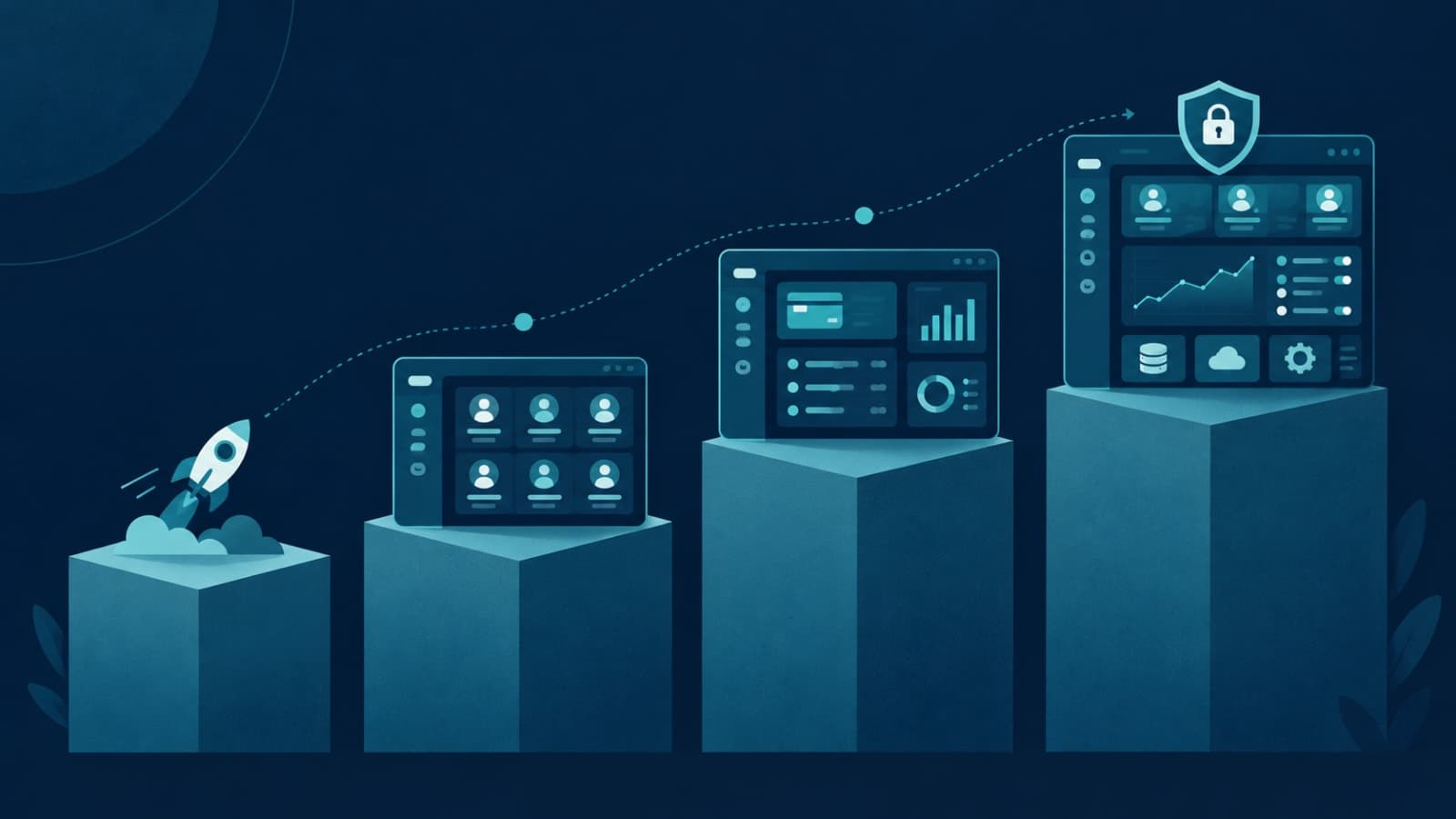
A typical timeline
| Weeks | Stage | What you get | What you do |
|---|---|---|---|
| 0–1 | Scoping | Written scope, milestones, timeline | Explain users and workflows, agree what's out |
| 1–3 | Design | Clickable screens for the main flows | Review, test with a few users |
| 3–10 | Build | Weekly demos of working features | Quick decisions, weekly feedback |
| 8–11 | Testing and fixes | Test builds on your phone or browser | Acceptance testing on real scenarios |
| 10–12 | Launch | Store submission, production setup | Store listings, launch plan |
What makes it take longer
- Scope that keeps growing. Each "small" addition adds days. See the real cost of one more feature.
- Slow decisions on your side, especially on design.
- Third-party dependencies: payment providers, government APIs, hardware.
- Several user types, such as customer, driver and admin, each with its own app.
- Store review, especially the first submission to Apple.
How to launch sooner without cutting the wrong corners
- Launch one platform first if your users mostly use one.
- Use proven services for sign-in, payments and email instead of building them.
- Keep an admin panel simple at first; your team can tolerate rough edges.
- Agree a fixed decision-maker who answers within a day.
- Don't skip testing, analytics or backups. They're cheap now and expensive later.
Your part of the timeline
The most common delay isn't development; it's waiting for content, answers or sign-off. Our guide to your role as the client shows what you'll need each week.Real examples
SpeakSpace, a voice recorder with AI transcription for Android and iOS, took about three months with two engineers. FieldOps, a field service platform with an admin dashboard, technician app and customer portal, also took about three months. Larger platforms with several apps, like Bhaada, took nine months.FAQ
Can an MVP be built in four weeks?
A very narrow product, such as a single web app with a few screens, sometimes can. Most products that need sign-in, payments and an admin view take longer.Does building for iOS and Android double the time?
Not with a cross-platform framework like Flutter. Most of the code is shared; testing and store setup add some time.How do I keep the timeline on track?
Freeze the scope for version one, make decisions quickly and review every weekly demo.Want a realistic timeline for your idea? Book a free scoping call and we'll map it week by week.