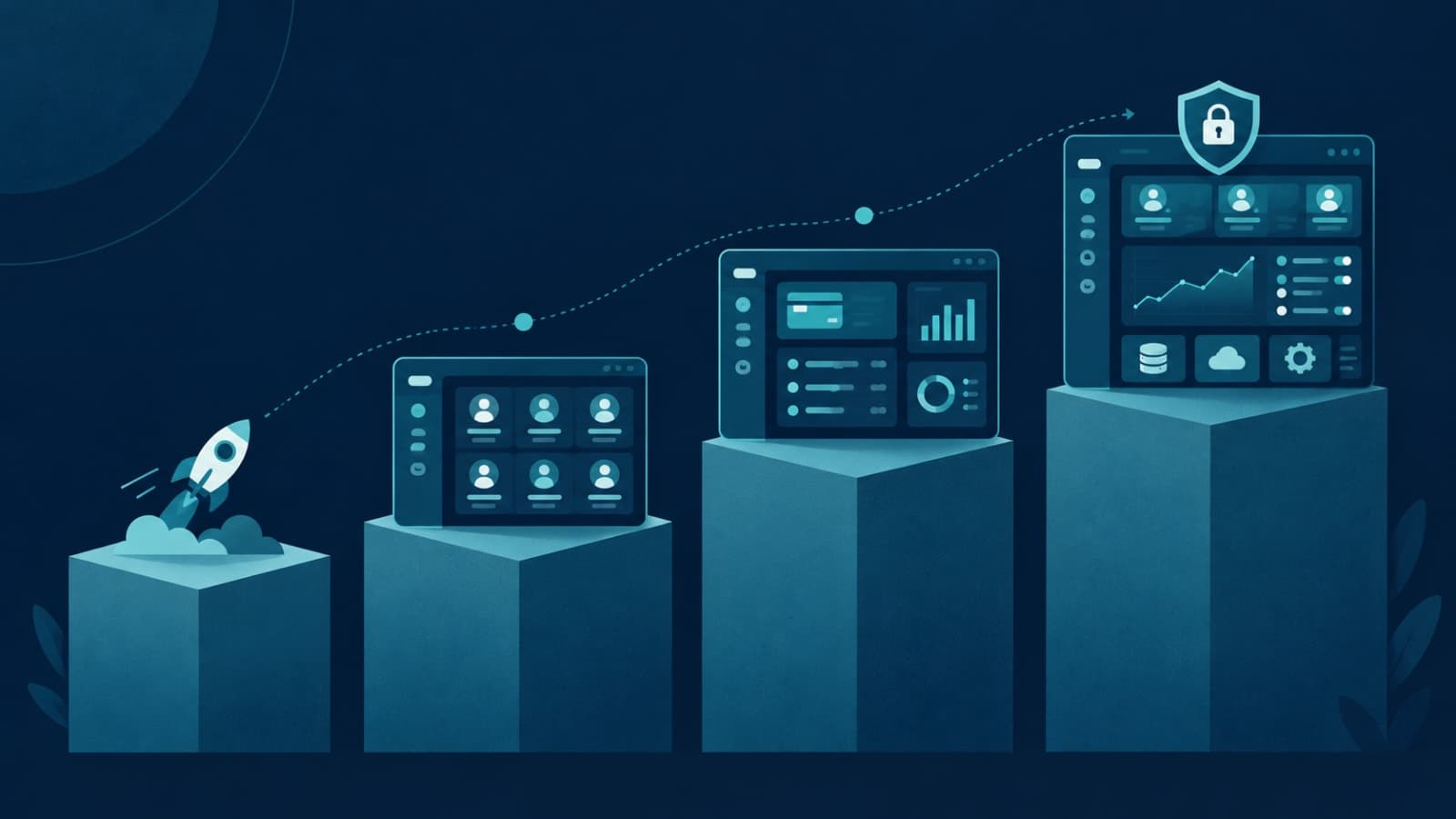
Stage 1: Validate the problem
Before paying anyone to build, talk to the people you want to sell to. Can they describe the problem without prompting? Do they already pay for a workaround? A clickable prototype or landing page can test demand cheaply.Stage 2: Scope the first version
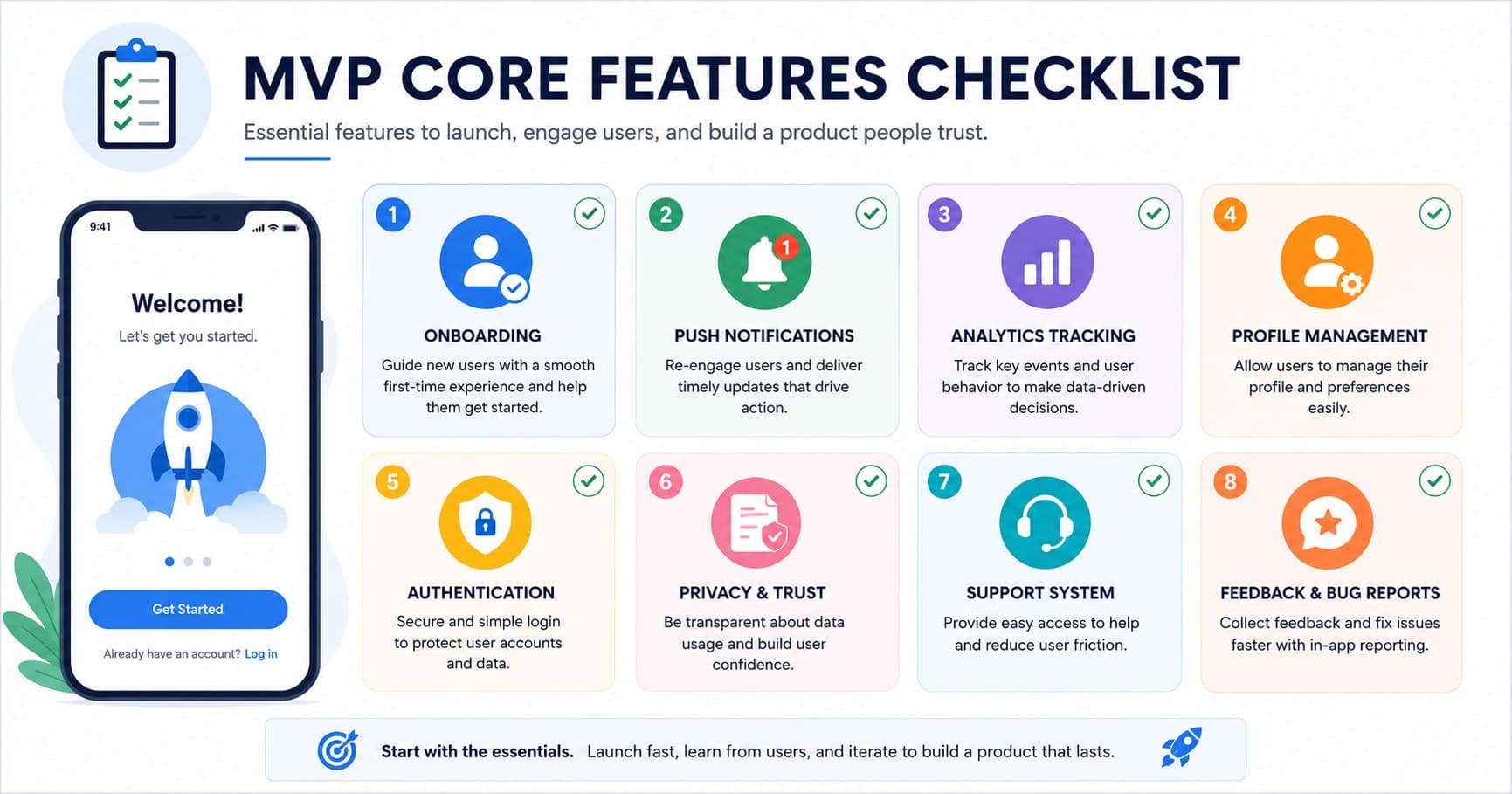
Pick the one job your product must do brilliantly and cut everything else to a later phase. Our list of 12 features every startup MVP should include covers the basics that can't be skipped, like sign-in, an admin view and analytics. A good agency gives you a written scope: what's in, what isn't, milestones and timeline.Stage 3: Design
Design turns the scope into screens you can click through. Test them with three to five real users before development starts; changes are cheap here and expensive later.Stage 4: Build in weekly increments
- A demo of working software every week.
- A shared list of what's done, in progress and next.
- Quick decisions from you when questions come up.
- Testing as features are built, not just at the end.
Stage 5: Launch
Launch is a sequence, not a day: store listings, a website, analytics, support channels and a plan for your first users. Our launch playbook lays out the order.Stage 6: Learn and iterate
Watch how people use it, fix what blocks them and decide the next phase from evidence. Budget for maintenance and running costs from day one.Decisions only you can make
- Who the first customer is, specifically.
- What's in version one and what waits.
- What success looks like after launch.
- Whether you need a technical owner beyond the agency. See fractional CTO vs agency vs co-founder.
What we've built ourselves
Besides client work, we build and run our own products, including StashBill, Trebexa and Bilexor. We also built Penso Notes, a multimedia diary app live on the Play Store and App Store. Going from idea to launch ourselves is how we know where first versions go wrong.FAQ
Do I need a technical co-founder to work with an agency?
No, but someone has to own technical decisions over time. That can be the agency at first, then a fractional CTO or hire as you grow.How detailed should my brief be?
Describe the problem, the users and the main workflows. See our guide to briefing an agency.Will I own the product?
You should. Make sure the contract transfers the code and IP to you and all accounts are in your name.Have an idea you want to build? Book a free scoping call and we'll help you shape version one.