Fall Rise Infotech

Fall Rise Infotech

Manufacturing & Industrial

Inventory, billing, and operations software for manufacturing and industrial businesses — built around real transaction complexity.

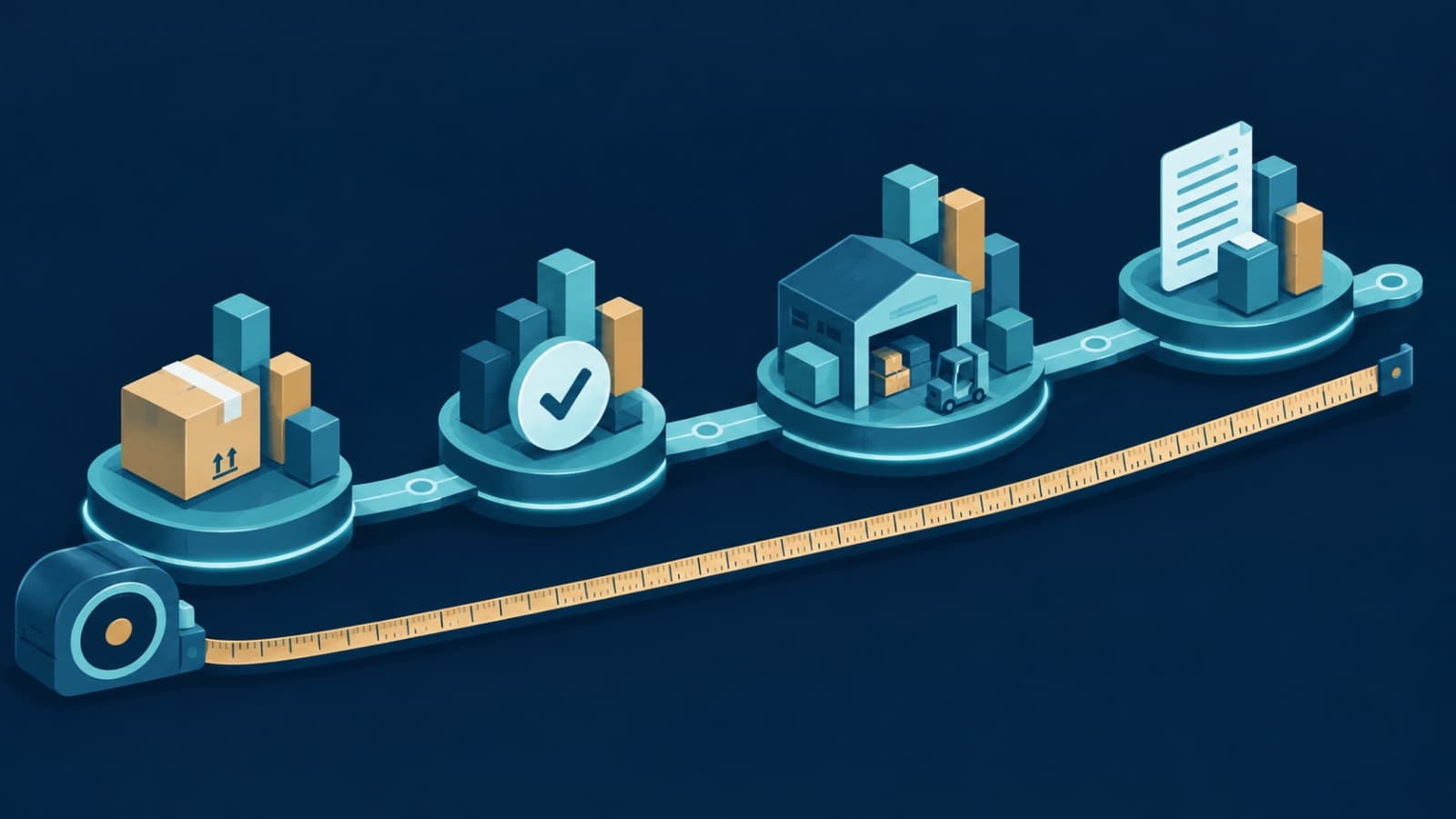
Manufacturing & Industrial banner

Manufacturing and industrial operations often run on transaction types and reporting needs that generic inventory software doesn't cover — multiple account types, dozens of process variations, and financial ledgers that have to be exactly right. We build for that complexity instead of forcing it into a generic template.

Where we've worked in this space:

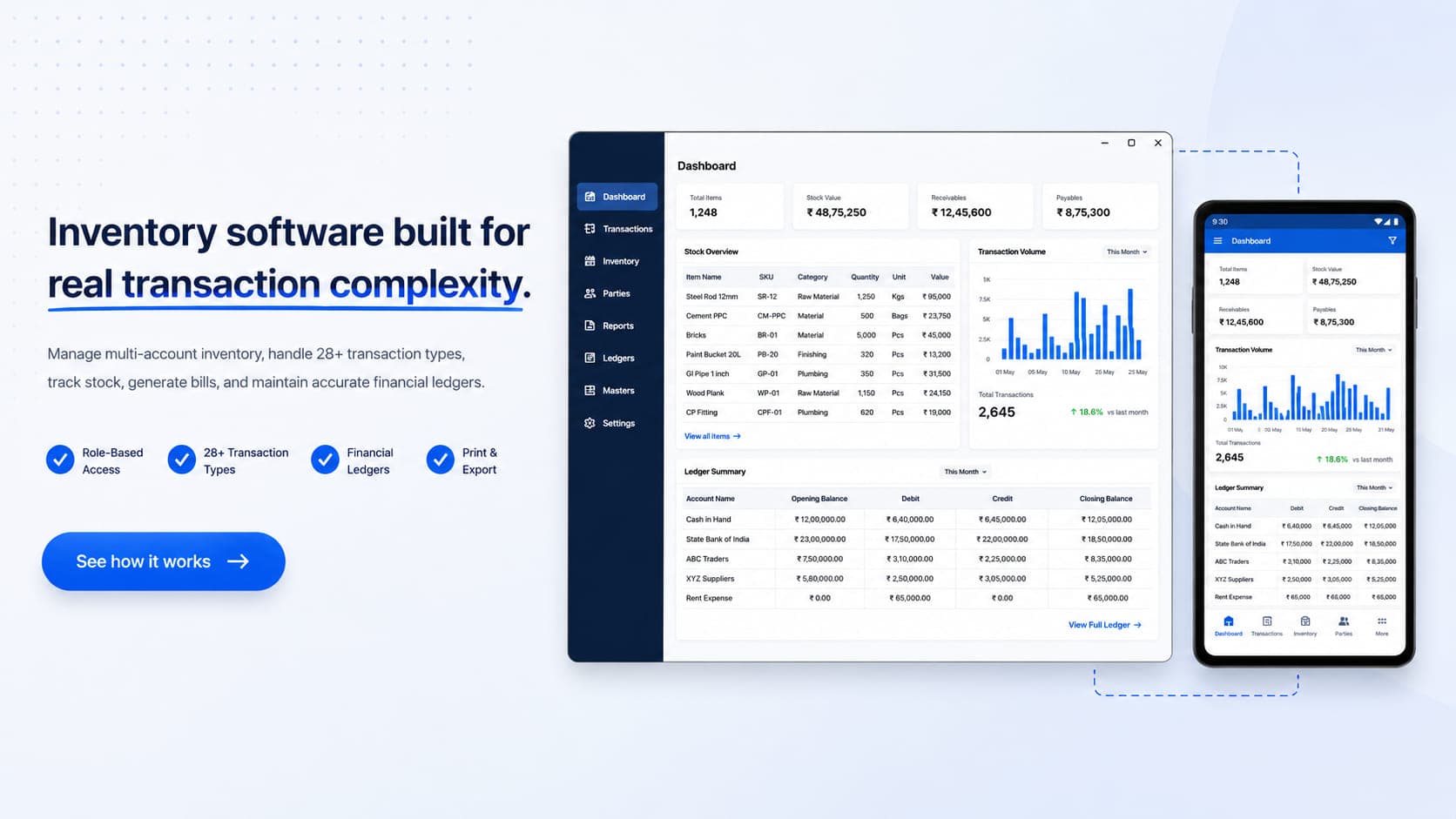
  • Multi-account inventory and billing systems with role-based access
  • ACID-compliant transaction engines covering dozens of process types
  • Financial ledgers, reporting, and print/export built for real accounting needs
  • Cross-platform delivery — Android and Windows from one codebase

Why generic inventory software falls short

Off-the-shelf inventory tools assume a simple buy-stock-sell flow. Real manufacturing and trading businesses have job work, returns, material issued to karigars or vendors, partial deliveries, and several accounts per party — and every one of those has to move stock and money correctly at the same time. When the tool cannot model a transaction, it ends up in a side spreadsheet, and the stock and ledger numbers drift apart.

What we build

ComponentWhat it does
Transaction engineEvery process type as its own transaction, with stock and ledger updated together or not at all (ACID)
Inventory and billingMulti-account stock, bills, and returns that match how the business actually trades
Ledgers and reportsParty ledgers, financial reports, and print and export for accounting
Access controlRole-based access so staff see and change only what their role allows
PlatformsAndroid and desktop (Windows, macOS) from one codebase

Case study: Umiya Jari inventory system

For the jari textile business behind Umiya Jari, we built cloud-based inventory and billing software with multi-account support, 28 transaction types, financial ledgers, print and export, and role-based access, running on Android and Windows.

Timeline

A focused MVP typically takes 6–12 weeks. The main driver is how many transaction types you run and how they affect stock and accounts, so we map those first during scoping.


Why This Industry

Industrial and manufacturing businesses are frequently still running critical operations on spreadsheets or outdated desktop software — there's a long runway for right-fit software that respects how complex their actual transactions are.

FAQ

When stock counts and ledgers stop matching, when more than one person edits the same sheet, or when you cannot see stock by location or party without rebuilding a report. Those are signs the process has outgrown a spreadsheet.

Yes — that is the main reason to build custom. For Umiya Jari we modelled 28 transaction types, each updating stock and ledgers together so the numbers never drift apart.

Yes. We build with Flutter, so one codebase runs on Android and desktop (Windows and macOS), which lets the office and the floor use the same system.

A focused MVP typically takes 6–12 weeks. The biggest factor is how many transaction types you run, so we map those first during scoping.
Guides for This Industry

Illustration of warehouse shelving with an inventory count dashboard overlay, representing manufacturing inventory and billing software
Case Study
Read Article
Manufacturing SMEs Are Still Tracking Inventory and Billing in Excel — Here's Where It Breaks

Manufacturing SMEs tracking inventory and billing in Excel usually don't notice the gap until a stock audit or a short order. Here's where it breaks, and what a connected system looks like.

2 min read·Sep 26, 2026
Business workflows from order to dispatch to invoice mapped onto building blocks, representing what drives custom software cost
Business
Read Article
Custom Software Development Cost in India: What Actually Drives the Price (2026)

Custom software isn't priced by the feature list. It's priced by the workflows it replaces, the people who use it, and what it connects to. Here's what drives the cost in India, and how to get a quote you can trust.

6 min read·Oct 23, 2026
Data moving across a bridge from spreadsheets to a structured business system
Business
Read Article
Moving Off Spreadsheets Without Stopping the Business: A 9-Step Data Migration Plan

The new system is ready. The hard part is moving years of spreadsheets into it without losing data or a week of trading. Here's a 9-step migration plan for a safe cutover.

3 min read·Oct 15, 2026
Chaotic chat-based approvals turning into a structured approval workflow
Business
Read Article
Still Approving Things on WhatsApp? What a Real Approval Workflow Looks Like

Discounts, expenses, and purchase orders approved with a thumbs-up emoji work until something goes wrong. Here's what a proper approval workflow includes, and how it speeds decisions up.

3 min read·Oct 17, 2026
Manual month-end spreadsheet chaos compared with automatically generated business reports
Business
Read Article
Why Month-End Reports Take Your Team 3 Days (and How to Get Them in Minutes)

If month-end means exporting, copy-pasting, and reconciling for days, the problem isn't your team. It's where your data lives. Here's why reporting takes so long and how to automate it.

3 min read·Oct 19, 2026
Featured
Operations machine with automation modules sealing leaks of wasted money and time
Business
Read Article
Reducing Operational Costs with Automation: Where to Start and What to Automate First

Operational costs hide in data entry, status chasing, approvals, reconciliation, and rework. This guide pulls our operations series together into one plan for what to automate first.

4 min read·Oct 21, 2026

Outgrown spreadsheets on the shop floor?

Share your inventory, billing, and transaction flows — we'll scope software built around how your business actually runs.

Send your project brief

Avg. response: 1–2 hours · Remote-first — clients worldwide