What an MVP actually needs tested
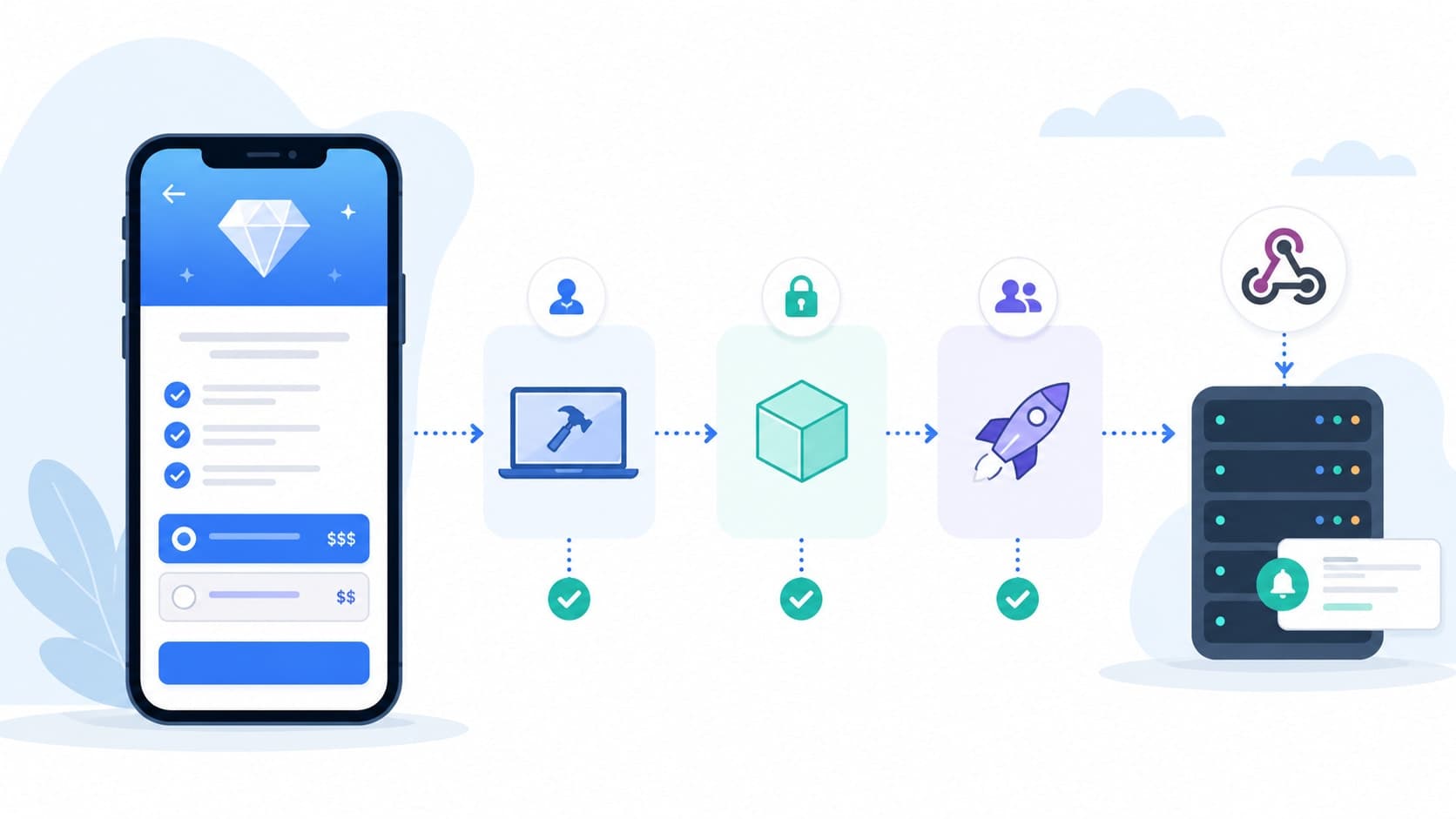
You don't need to test everything equally. Focus on the flows where a bug costs you money, trust, or data:- Sign-up and login — if people can't get in, nothing else matters.
- Payments and subscriptions — charges, renewals, refunds, failed cards. See how to test App Store subscriptions.
- The core workflow — the one thing your product exists to do, end to end.
- Data entry and saving — wrong inputs, double-clicks, lost connections. Our list of data entry safeguards doubles as a test checklist.
- Permissions — users can only see and change what their role allows.
- Devices and browsers your customers actually use, including older phones and slow networks.
Manual vs automated testing
| Manual testing | Automated testing | |
|---|---|---|
| Best for | New features, usability, visual checks, exploratory testing | Repeated checks on stable flows: login, payments, core API |
| Cost pattern | Cost repeats every release | Higher setup cost, cheap to re-run |
| When it pays off | From day one | Once a flow stops changing every week |
| Main risk | Things get skipped under deadline pressure | Tests break when the product changes, and need upkeep |

Your three options
1. Testing included with your development team
If an agency builds your product, testing should be part of the job, not an add-on. Ask what's included: a staging environment, device testing, automated tests for the backend, and a release checklist. This is the most cost-effective setup before product-market fit, because the people testing know the code.2. Outsourced QA
A separate QA vendor or freelancer tests each release independently. It helps when you ship often, support many devices, or need regression testing that developers keep skipping. The trade-off is context: an outside tester needs good test cases and access to a stable staging environment to be useful.3. In-house QA
A QA engineer on your team knows the product deeply and can own the release process. It's worth it once the product is complex, releases are weekly or faster, and bugs in production are costing you customers — usually well after the MVP. Until then, the same budget does more as developer time spent on tests. Our in-house vs outsourced team guide covers the wider hiring decision.What skipping testing really costs
A login bug or a failed payment in production doesn't just need fixing — it costs support time, refunds, bad reviews, and users who never come back. Our post on the cost of app downtime shows how quickly that adds up. Testing is cheaper than the incident, every time.Questions to ask your development partner about testing
- Do you have a separate staging environment where I can test before release?
- Which flows are covered by automated tests, and do they run before every release?
- Which real devices and OS versions do you test on?
- What's your release checklist, including app store submission?
- How are bugs reported, prioritised, and fixed after launch — and is that in the maintenance plan?
FAQ
Should we outsource automation testing or build an in-house team at an early stage?
At an early stage, neither as a separate team is usually needed. Make automated tests part of development for stable, critical flows, and outsource or hire dedicated QA only when release frequency and complexity justify it.When should a startup hire its first QA engineer?
Typically after product-market fit, when the product has many features, ships weekly or faster, and production bugs are affecting customers.Is manual testing enough for an MVP?
For new and changing screens, often yes. But login, payments and core backend logic deserve automated tests from the start, because a silent failure there is expensive.Does outsourcing QA slow down releases?
It can, if testers lack context or a stable staging environment. With clear test cases and a predictable release schedule, it usually speeds releases up by catching problems earlier.Building an MVP and want testing done properly from day one? Book a free scoping call — we'll include testing, staging and release checks in a fixed, itemised quote.