What It Actually Costs to Run Your App Every Month (After Launch)
The build quote is only half the budget. Here's what an app costs to run every month after launch, which costs grow with users, which stay flat, and where founders overspend.
Businessapp-running-costshosting-costsstartup-budgetingsaas-infrastructureapp-maintenance5 min read·
Short answer: for a typical business app or SaaS product — no video streaming, no heavy AI — the running costs at launch are usually modest: often well under a few hundred dollars a month for hosting and services, plus a maintenance retainer. What surprises founders isn't the starting bill, it's the costs that grow with every user: SMS, email, storage, payment fees and app store commission. This guide lists every line on the monthly bill, shows how it changes as you grow, and where to save.
If you're still at the budgeting stage, read this alongside how much it costs to build a mobile app in 2026 — the build and the running costs belong in the same plan.
The monthly bill, line by line
Typical monthly running costs for a business app
Cost
What it covers
Grows with
Hosting / servers
Backend API, web app, background jobs
Traffic and workload
Database
Managed database, backups
Data volume and queries
File storage and CDN
Images, documents, downloads
Files uploaded and served
SMS and WhatsApp
OTP logins, alerts, reminders
Every message sent
Email
Confirmations, receipts, password resets
Emails sent
Push notifications
Mobile alerts
Usually free or very low
Maps and location
Address search, routes, live tracking
Map loads and lookups
Payment gateway
Card, UPI and wallet payments
Revenue (a % per transaction)
App store fees
Apple $99/year; Google Play $25 one-time; commission on in-app purchases
In-app revenue
Monitoring and error tracking
Uptime alerts, crash reports, logs
Users and log volume
AI APIs (if used)
Chat, summaries, document reading
Every AI request
Maintenance
Updates, fixes, security patches
Mostly flat; grows with features
How the bill changes as you grow
Rough ranges for a standard business app or SaaS product, excluding maintenance and payment fees. Media-heavy and AI-heavy products sit well above these.
Indicative monthly infrastructure and service costs by user base
Stage
Active users
Typical monthly range
What dominates
Launch
Around 100
$0–$100
Base hosting and database; many services are free at this size
Traction
Around 1,000
$100–$500
Database, SMS/OTP, email, monitoring
Growth
Around 10,000
$500–$2,500
Messaging, storage, database size, maps
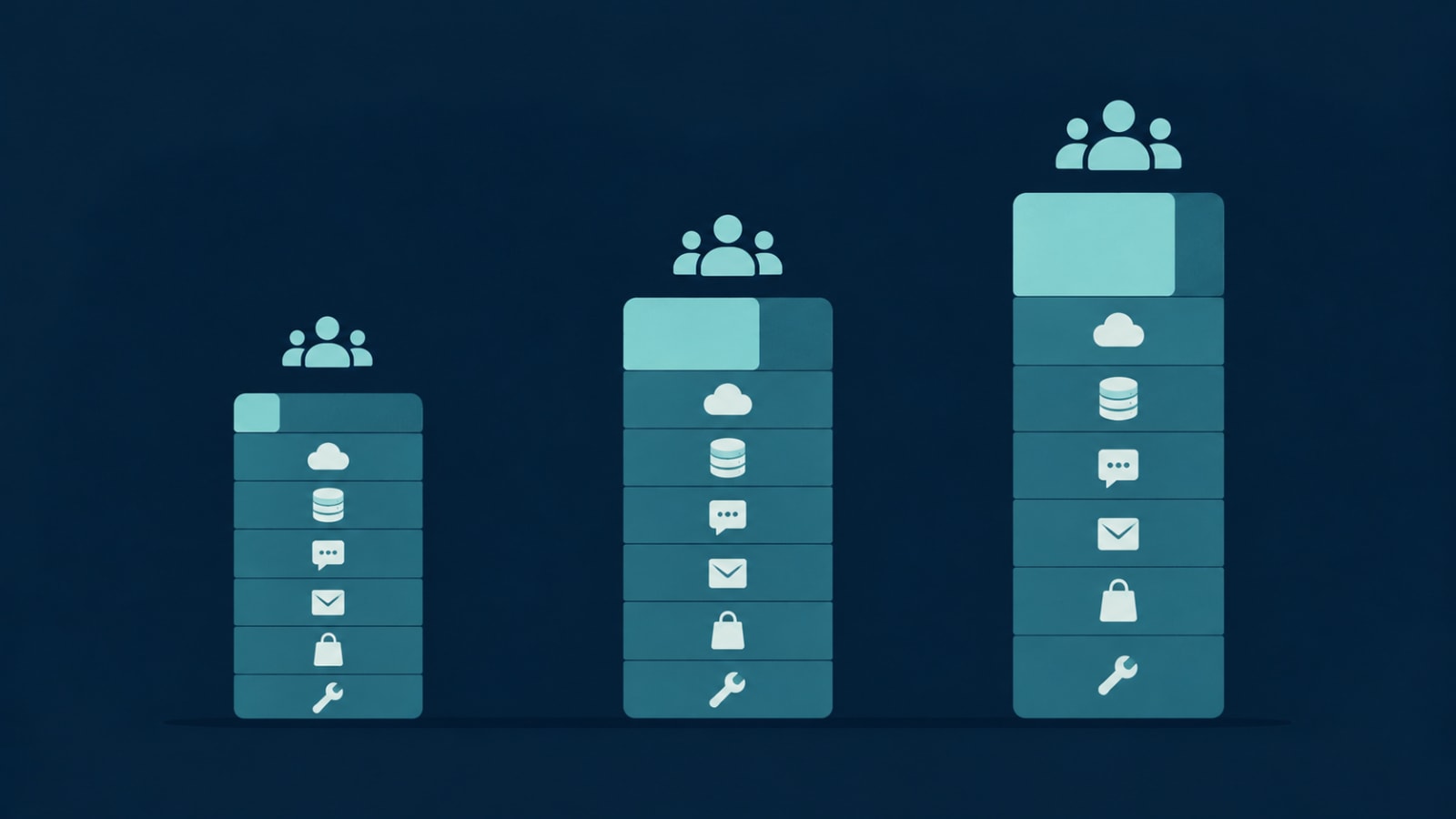
Notice which lines move: hosting grows slowly if the backend is well designed, while per-message and per-request costs grow in a straight line with usage. That's why the architecture choices made during the build — caching, efficient queries, sensible use of SMS — show up on your bill for years. A well-built backend is one of the cheapest ways to keep running costs flat.
App store commission. Digital subscriptions sold inside iOS and Android apps usually carry a 15–30% commission. Our payment rail guide explains when it applies.
Domain, SSL and business email. Small, but annual renewals are easy to miss.
Unused SaaS seats. Design, analytics and support tools add up — run the 30-minute SaaS audit every quarter.
Maintenance: the line that keeps the others working
Operating systems update, app stores change their rules, libraries need security patches, and APIs you depend on get retired. A common rule of thumb is to budget around 15–20% of the original build cost per year for maintenance, more if you're actively adding features. Our guide to what a maintenance plan should cover lists what to expect in the contract.
Five ways to keep the monthly bill down
Start on managed services with generous free tiers, and set billing alerts on every cloud account from day one.
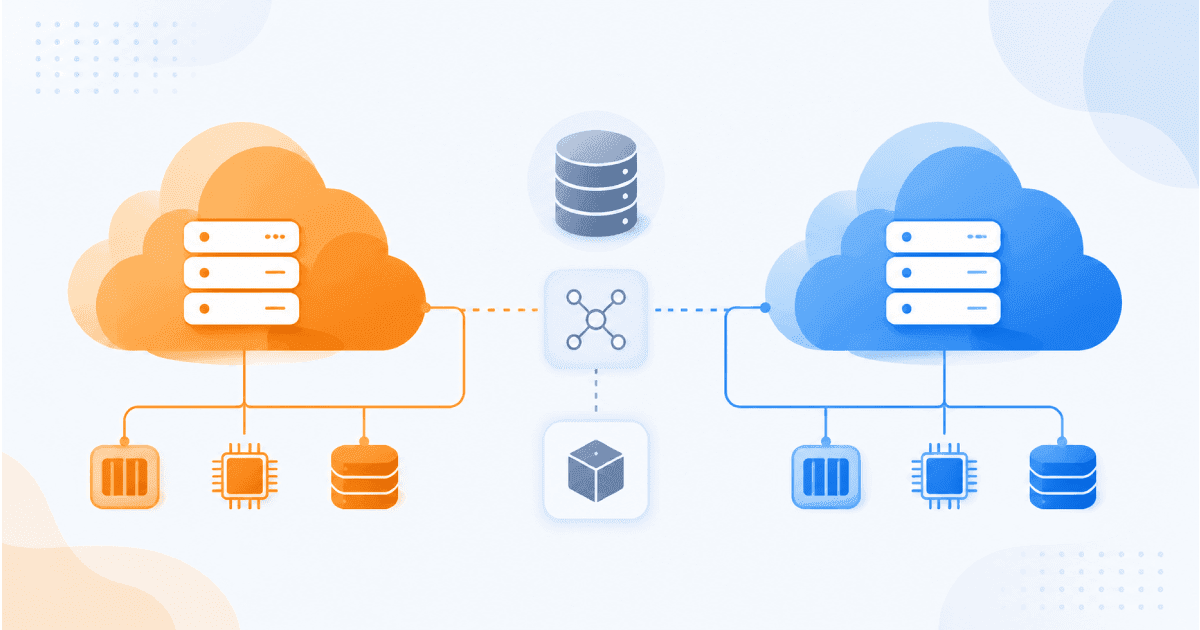
Choose the right cloud for your stage — see GCP vs AWS for startups and check startup credit programs.
Use push and email before SMS wherever the user experience allows.
Compress and resize images on upload so storage and bandwidth stay small.
Review the bill monthly against active users, so a cost that grows faster than usage gets caught early.
When we set up hosting and deployment for a client, cost alerts, backups and a staging environment are part of the default setup, so the monthly bill is predictable from launch. To see how running costs should sit against your pricing, read how much margin software should eat into your price.
FAQ
How much does it cost to maintain an app per month?
It depends on the app and how actively it's being improved. Budget for infrastructure and services (often small at launch) plus a maintenance retainer, commonly sized at around 15–20% of the build cost per year.
Are hosting costs high for a new app?
Usually not. Most new business apps run comfortably on small managed servers and free or low tiers. Costs rise with users, data, and per-message services.
Do I have to pay Apple and Google every year?
Apple's developer program is an annual fee; Google Play is a one-time registration. Both may also take a commission on digital goods and subscriptions sold inside the app.
Who should own the cloud and service accounts?
Your company. Developers should be given access, but billing and ownership should stay with you.
Want a running-cost estimate for your app before you build? Book a free scoping call and we'll map the build and the monthly bill together.