ACID Transactions, Explained Without the Textbook Definition
Every engineer memorizes the ACID acronym. Few can explain why it matters until money or data goes missing mid-transaction — here's the plain-English version.
Engineeringacid-transactionsdatabase-designdata-integritysaas-architecturebackend-development6 min read·
If you've ever sat through a computer science lecture, you've heard the acronym: Atomicity, Consistency, Isolation, Durability. Most engineers can recite it. Far fewer can tell you why it actually matters — until the day a customer gets charged twice, or an order shows as placed on one screen and missing on another.
ACID isn't academic trivia. It's the reason your bank balance doesn't randomly change, the reason two people can't book the same seat on a flight, and the reason a payment that fails halfway through doesn't leave your database in a half-true state. This is what ACID actually means, why it matters for a growing SaaS product, and how it looks in a real, production system.
What ACID actually means, in plain English
Skip the formal definitions for a second. Here's what each letter is actually protecting you from.
Atomicity — all or nothing, no in-between
A transaction is a group of database changes that has to happen together. Deduct stock, record the sale, update the customer's order history — atomicity means all three happen, or none of them do. There's no version of reality where the stock goes down but the sale never gets recorded. If any step fails, the entire transaction rolls back as if it never started.
Consistency — the rules never bend, not even for a second
Every transaction has to leave the database in a state that still makes sense: balances can't go negative when they shouldn't, foreign keys can't point to records that don't exist, totals have to actually add up. Consistency is the promise that a transaction can't sneak through a change that breaks those rules, even temporarily.
Isolation — concurrent users can't step on each other
Two people rarely use software one at a time. Isolation makes sure that two transactions happening at the same moment don't see each other's half-finished work. Without it, two staff members editing the same inventory record at once can each read the same starting number, both subtract from it, and quietly erase one of the updates — a classic race condition.
Durability — once it's confirmed, it's permanent
Once a transaction is committed — the user sees "Payment successful" — it has to survive a server crash, a power cut, or a restart five seconds later. Durability is what makes a confirmation trustworthy instead of optimistic.
Why this matters more than it looks like it should
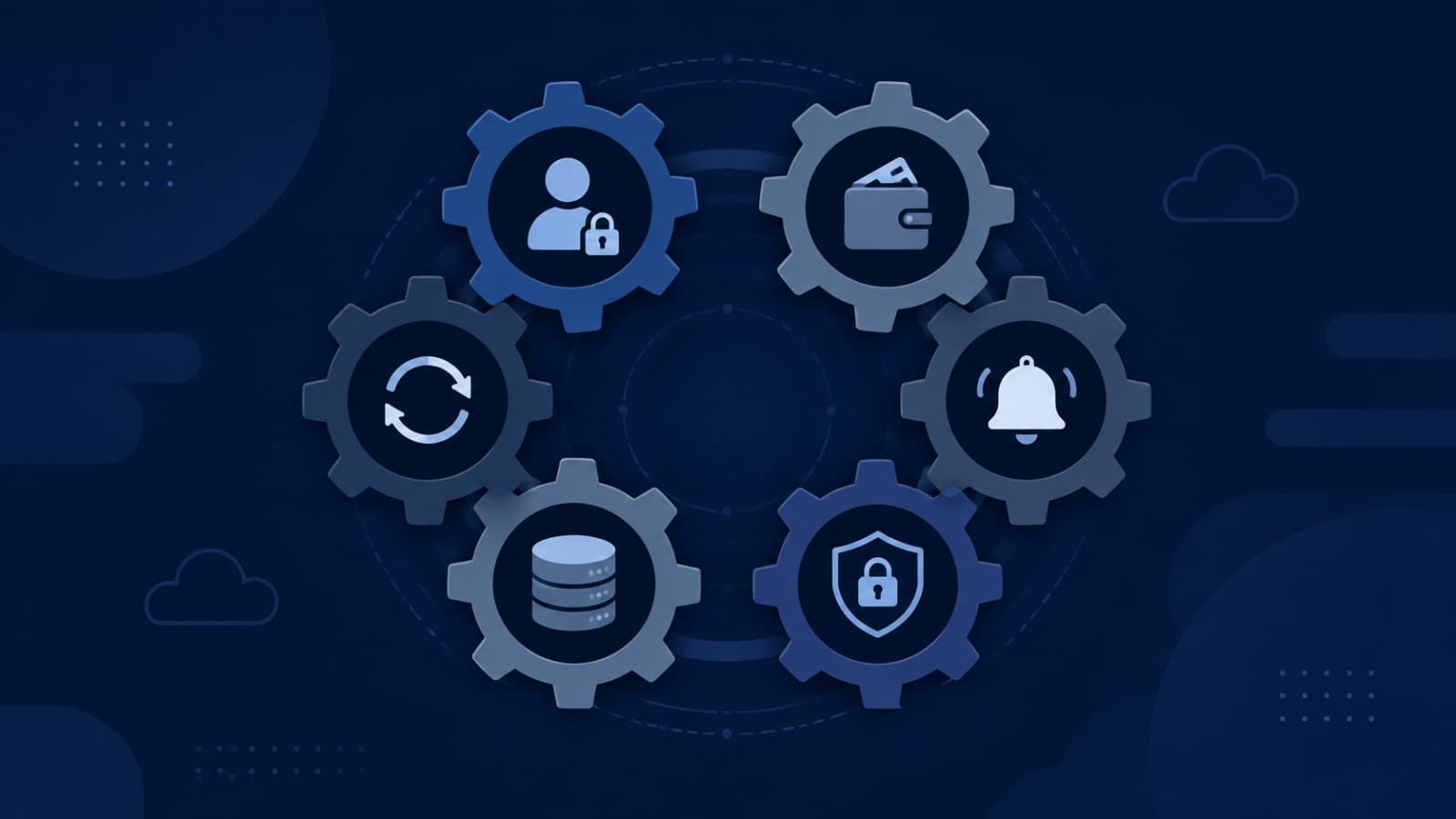
Most of the time, ACID is invisible. It only becomes visible the moment it's missing — a support ticket that says "I paid but the app still shows unpaid," a warehouse count that doesn't match what's actually on the shelf, a subscription that got billed twice because two servers processed the same webhook at once. These aren't rare edge cases in a growing product; they're what happens by default when transaction boundaries weren't designed on purpose. We covered how quietly this kind of gap drains revenue in where subscription revenue leaks, and it's one of the six systems we mapped out in the six systems every SaaS founder doesn't see until something breaks.
A real example: 28 transaction types, zero half-completed records
We built this into Umiya's cloud inventory and billing platform directly, because the business runs on numbers that have to be exactly right. The system handles 28 distinct transaction types across four account roles — purchases, sales, stock transfers, returns, adjustments, and more — and every single one of them runs as an ACID-compliant database transaction.
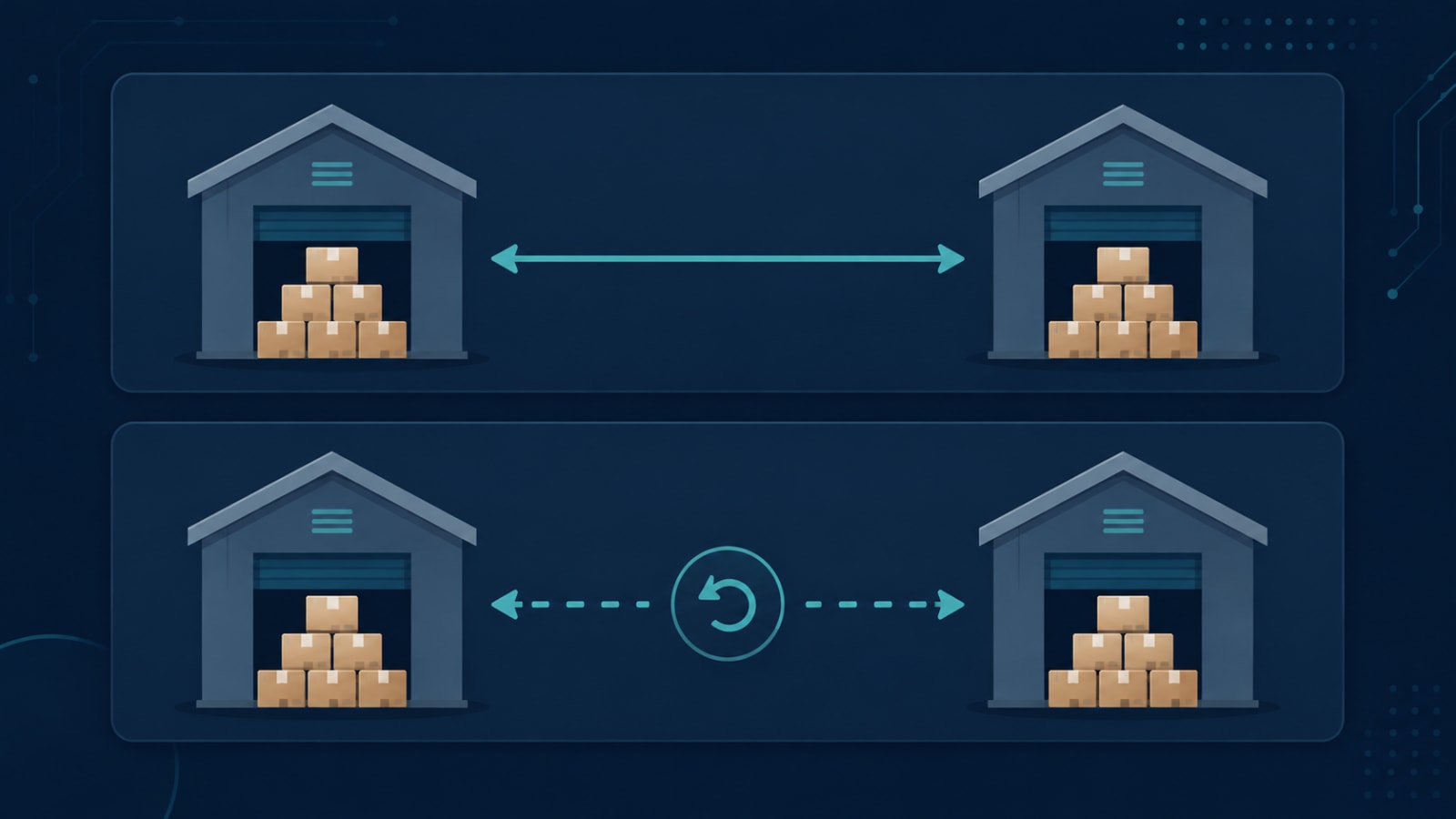
Here's why that specific choice mattered: a stock transfer between two warehouses touches at least two records — stock decreasing at the source, stock increasing at the destination. If that update isn't atomic, a network hiccup between step one and step two can leave inventory permanently short at both locations, with no error and no obvious trace. Multiply that across thousands of transactions a month, and "probably fine" turns into a financial reconciliation nightmare. Wrapping every transaction type in proper atomicity and isolation means a failure anywhere in the chain rolls the whole operation back — the books either update completely, or they don't move at all.
An atomic stock transfer — both sides update, or neither does.
That kind of reliability isn't a nice-to-have for inventory and billing software — it's the entire point. A system that occasionally "forgets" half a transaction isn't a bug someone will patch later; it's a reason customers stop trusting the numbers on their own dashboard.
What breaks first when ACID isn't taken seriously
Double-charging: a payment webhook fires twice, and without proper isolation and idempotency handling, the same order gets billed twice.
Ghost inventory: stock decrements on one table but the corresponding sale record never gets written, so warehouse counts drift further from reality every week.
Silent overselling: two customers buy the last unit of something at the same second, and without isolation, both purchases succeed.
Orphaned records: a parent record gets deleted but related child records survive, quietly breaking reports and exports later.
Support tickets with no root cause: "it worked yesterday" bugs that trace back to a race condition nobody can reliably reproduce.
When you don't need full ACID everywhere
Not every table in your database needs the same guarantees. A view count or an analytics event that's off by a few doesn't need strict isolation — forcing it to behave that way just slows the system down for no real benefit. This is where a lot of teams over-correct or under-correct, and it's the same trade-off we walked through in why two screens in your own app can show different numbers: money, inventory, and anything tied to a legal or financial record needs strict ACID guarantees. Activity feeds, recommendation counters, and most analytics can safely trade strict consistency for speed.
The skill isn't applying ACID everywhere — it's knowing exactly where the line sits, and never letting it move by accident.
How We Approach This at Fall Rise
Every backend we build starts by mapping out which operations touch money, inventory, or legally significant records, and wrapping exactly those in properly scoped, ACID-compliant transactions — not the whole database wrapped indiscriminately, and not left to chance. This is core to how we approach backend and API development, and it's the same discipline behind every SaaS product and custom software system we ship.
If your product handles payments, inventory, or any number your customers rely on being correct, we'd be glad to review how your current transaction boundaries are set up. Get in touch and we'll walk through it with you.